Description
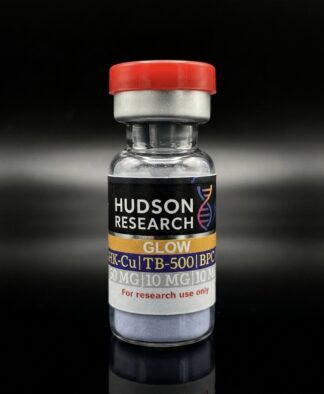
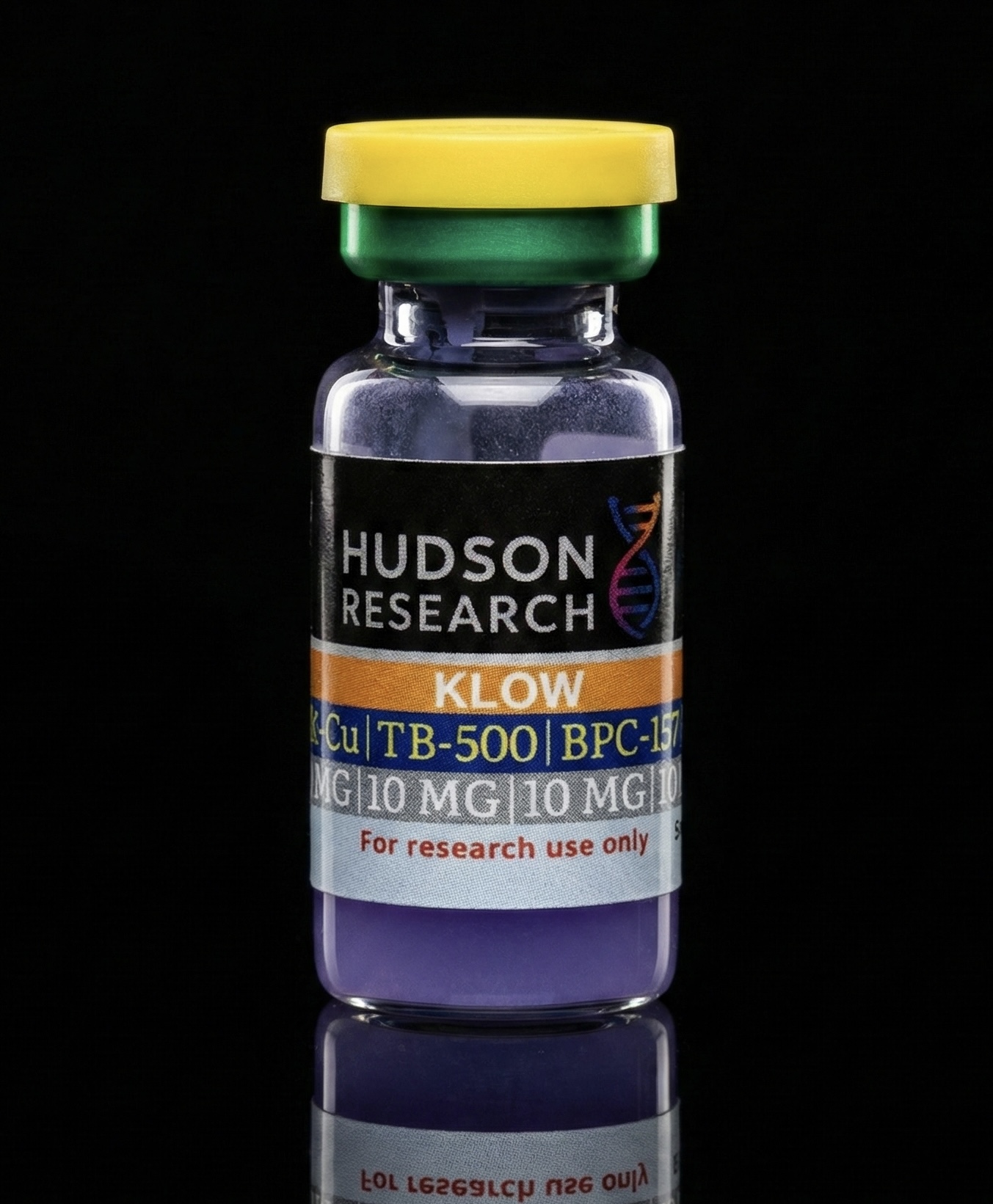
Technical Monograph: HRL-KLOW | Quad-Phase Structural Composite
Product Code: HRL-KLOW-80 | Total Active Mass: 80 mg
Molecular Specification & Composition
| Component | Sequence / Chemical Type | Mass | Role in Research |
| G-COP (GLW) | GHK-Cu Tripeptide | 50 mg | Collagen & ECM Upregulation |
| K-PV Fragment | Immunomodulatory Tripeptide | 10 mg | Cytokine & NF-κB Signaling |
| B-PC Fragment | Pentadecapeptide | 10 mg | Angiogenesis & Gastric-Type Signaling |
| T-B-5 Fragment | Thymosin Beta-4 Analog | 10 mg | Actin-Binding & Cellular Migration |
Laboratory Application Fields
-
Extracellular Matrix (ECM) Research: Investigating the concurrent upregulation of collagen type I, elastin, and glycosaminoglycans.
-
Myofibroblast Modulation Models: Analysis of the peptide’s influence on tissue-remodeling and fiber-alignment simulations.
-
Cytokine Expression Studies: Evaluation of the suppression of pro-inflammatory markers in isolated biological samples.
-
Vascular Endothelial Signaling: Studying the impact of the B-PC/T-B-5 interaction on new vessel formation in angiogenesis models.
Storage & Handling Protocols
-
Thermal Management: Store lyophilized vials at -20°C for long-term molecular stability.
-
Visual Verification: Upon reconstitution, the 50 mg concentration of G-COP will produce a characteristic deep-blue hue, confirming successful chelation.
-
Reconstitution: Maintain at 2-8°C post-reconstitution. Avoid high-velocity agitation to prevent mechanical degradation of the delicate peptide bonds.
IMPORTANT NOTICE & DISCLAIMER
FOR LABORATORY RESEARCH USE ONLY. This product is a synthesized chemical reagent intended solely for in vitro laboratory research and analytical testing. It is NOT a drug, food, or cosmetic, and it is NOT intended for human consumption, inhalation, or any form of internal or external application to humans or animals.
Any use of this product outside of a controlled laboratory setting is strictly prohibited. The purchaser assumes all responsibility for the handling, storage, and regulatory compliance of this compound. Hudson Research Lab does not provide medical advice or instructions for human application. Keep out of reach of children.