Description
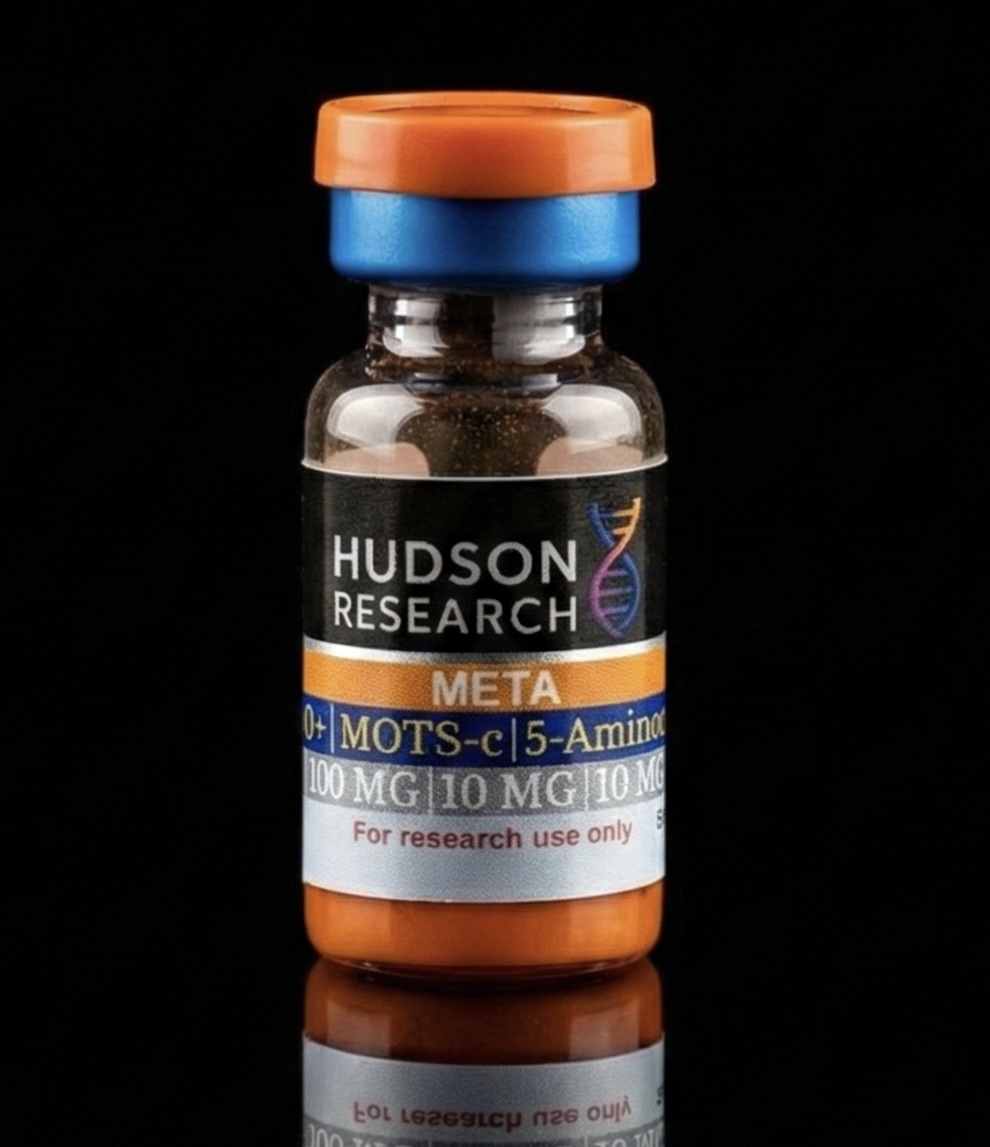
Technical Monograph: HRL-META | Tri-Phase Mitochondrial Composite
Product Code: HRL-META-120 | Total Active Mass: 120 mg
Molecular Specification & Composition
| Component | Sequence / Chemical Type | Mass | Role in Research |
| N-AD-OX (NAD+) | Coenzyme Redox Reagent | 100 mg | Sirtuin (SIRT1) Activation |
| MOT-Sc | Mitochondrial-Derived Peptide | 10 mg | AMPK Signaling & Metabolic Flux |
| 5-AM-1MQ | Small Molecule NNMT Inhibitor | 10 mg | SAM-Level Regulation |
Laboratory Application Fields
-
Mitochondrial Biogenesis Research: Investigating the concurrent upregulation of PGC-1$alpha$ and mitochondrial DNA transcription.
-
Sirtuin-AMPK Axis Mapping: Analysis of the cross-talk between NAD-dependent deacetylases and the cellular “energy sensor” (AMPK).
-
Methylation Pathway Studies: Evaluation of the impact of 5-Amino-1MQ on nicotinamide -methyltransferase activity and its influence on metabolic efficiency.
-
Bioenergetic Recovery Models: Studying the restoration of ATP synthesis and redox balance in stressed cellular environments.
Storage & Handling Protocols
-
Thermal Management: Store lyophilized vials at -20°C. This composite is highly sensitive to moisture and heat due to the NAD+ component.
-
Reconstitution: Maintain at 2-8°C post-reconstitution. Use an appropriate laboratory aqueous solution; do not subject the vial to high-frequency agitation or prolonged light exposure.