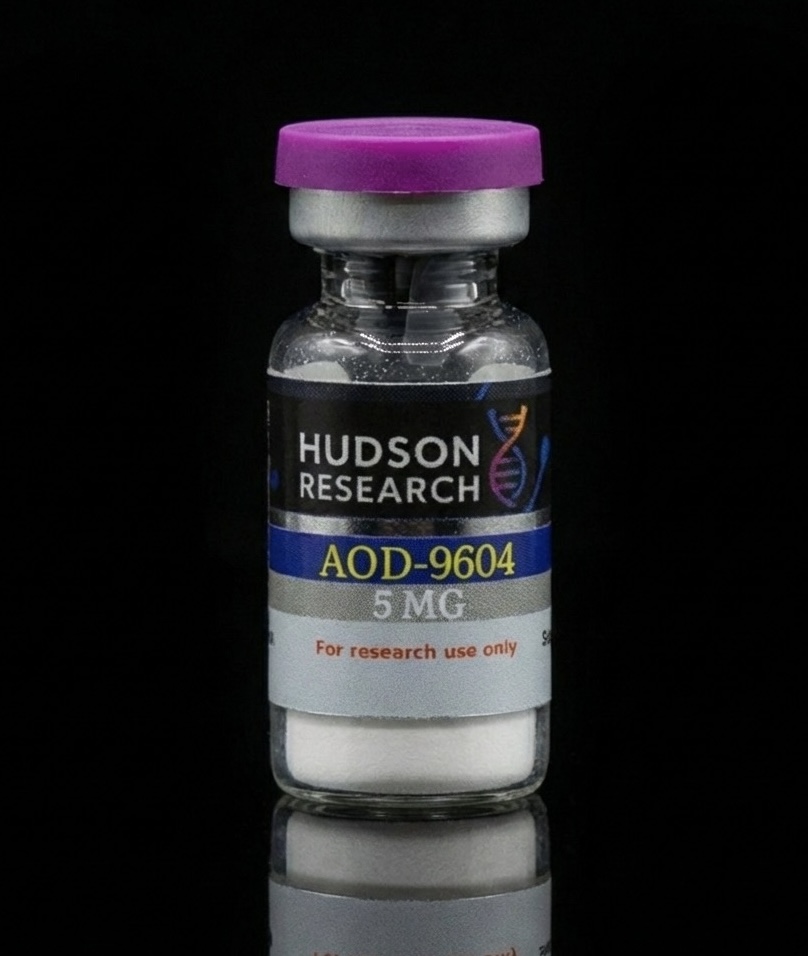
Description
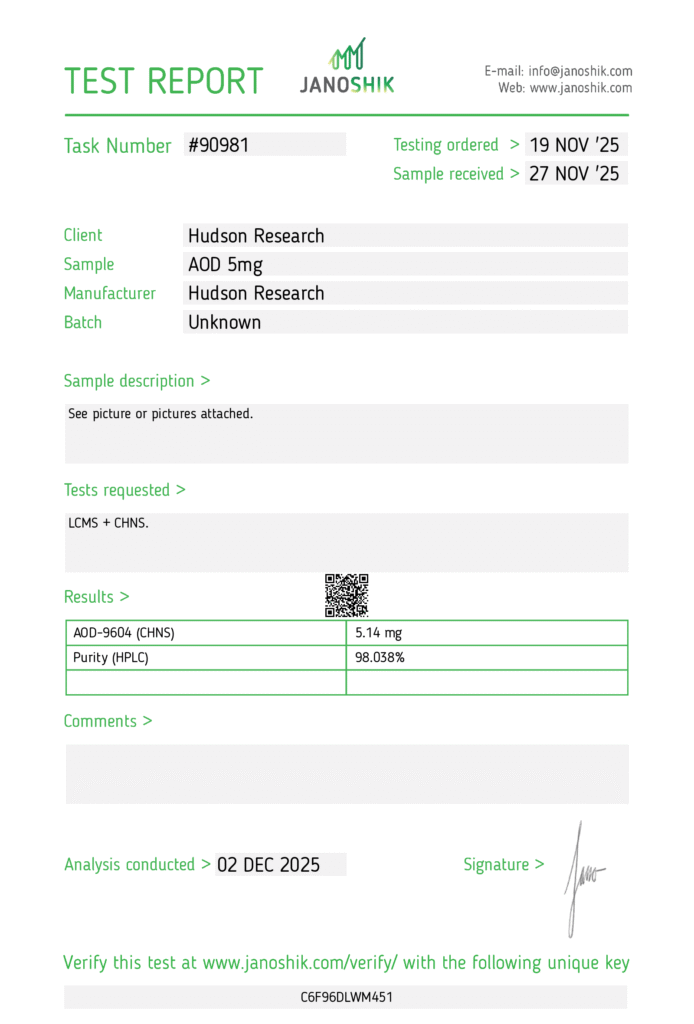
Product Name: AOD-9604 Molecular Formula: C78H123N23O23S2 Molar Mass: ~1815.1 g/mol Sequence: Tyr-Leu-Arg-Ile-Val-Gln-Cys-Arg-Ser-Val-Glu-Gly-Ser-Cys-Gly-Phe (Disulfide bridge: Cys7-Cys15)
Product Overview AOD-9604 was developed to identify the specific domain of the Human Growth Hormone molecule responsible for lipid metabolism. It consists of the modified 177-191 amino acid sequence of hGH. Unlike full-length hGH, AOD-9604 does not bind to the high-affinity growth hormone receptor (GHR) implicated in IGF-1 release.Consequently, it presents a unique profile in research, allowing for the study of fat metabolism without influencing blood glucose levels or cell proliferation.
Mechanism of Action AOD-9604 operates through a targeted metabolic pathway:
-
Lipolysis Stimulation: It triggers the release of fat from obese adipose cells.
-
Anti-Lipogenesis: It inhibits the differentiation of pre-adipocytes into mature fat cells and prevents the accumulation of triglycerides.
- Beta-3 Adrenergic Pathway: Evidence suggests it enhances the activity of beta-3 adrenergic receptors, which are critical for thermogenesis and fat oxidation.
-
Cartilage Repair: Recent studies have also indicated that AOD-9604 may potentiate the differentiation of mesenchymal stem cells into cartilage, suggesting potential applications in osteoarthritis research.
Research Applications AOD-9604 is a primary subject in metabolic and regenerative research, including:
-
Obesity Models: Investigating the reduction of visceral and subcutaneous fat depots in diet-induced obesity models.
-
Metabolic Safety: Studying fat loss agents that do not induce hyperglycemia or insulin resistance (a common side effect of full hGH).
-
Osteoarthritis: Exploring the peptide’s regenerative effects on cartilage tissue and its potential to reduce joint pain and inflammation.
Storage and Handling
-
Storage: Store lyophilized powder at 2-8°C. Protect from light.
-
Stability: Stable for 2 years when stored properly in lyophilized form. Reconstituted solutions should be kept at 4°C and are generally stable for up to 4 weeks, though immediate use is preferred.
Disclaimer: This material is sold for research and development purposes only. It is not intended for human ingestion, diagnostic, therapeutic, or clinical procedures. All research must be conducted by qualified professionals in a laboratory setting.