Description
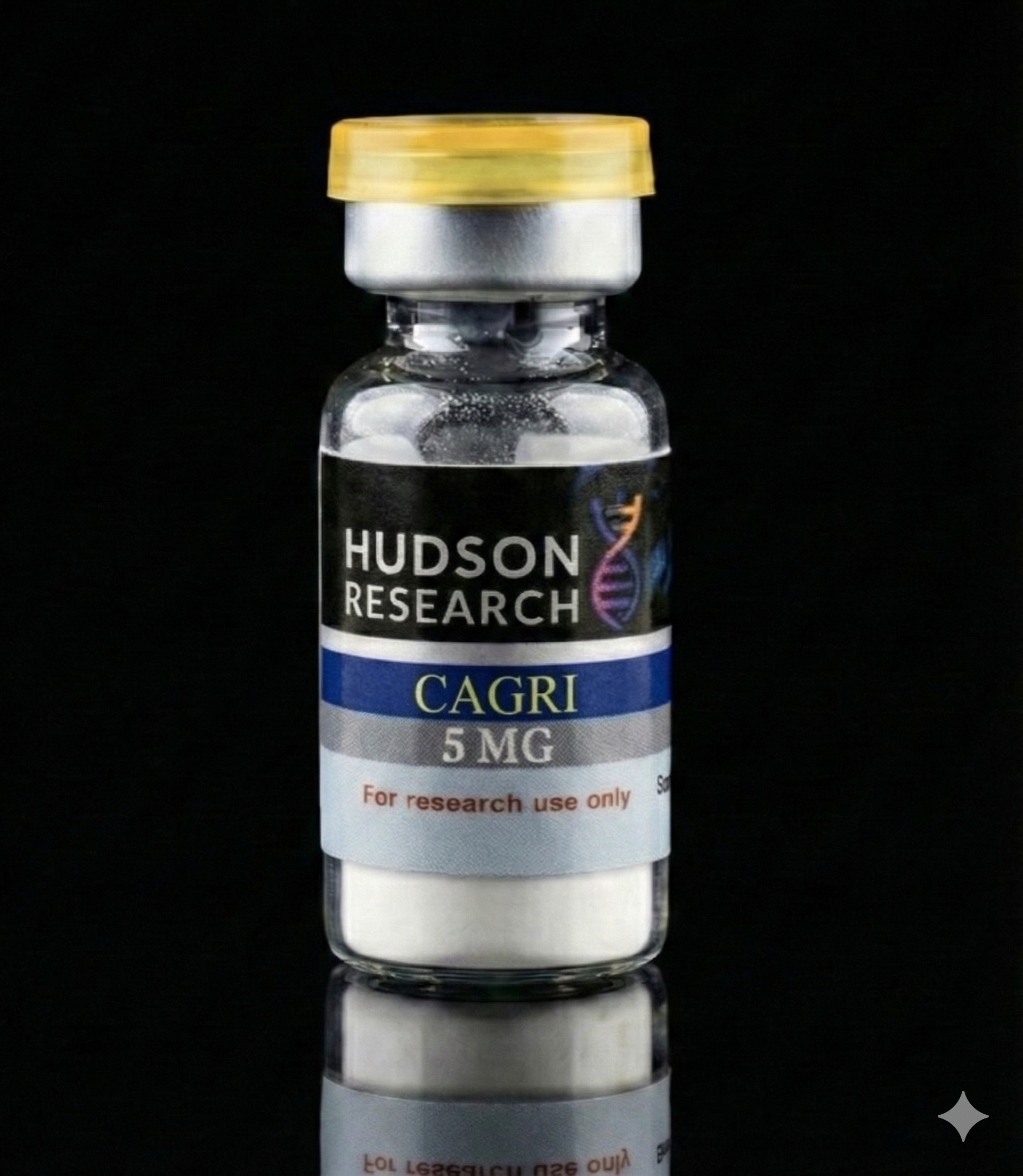
Product Name: Cagrilintide Molecular Formula: C169H270N44O55S Molar Mass: ~3900–4500 g/mol (varies slightly by counterion/salt) Sequence: Modified Human Amylin sequence with C20 fatty diacid acylation.
Product Overview Cagrilintide (formerly AM833) represents a significant advancement in amylin-based research. Native amylin is a hormone co-secreted with insulin that regulates glucose and satiety, but its utility in research is limited by its rapid clearance and tendency to form amyloid fibrils. Cagrilintide features specific amino acid substitutions that prevent fibrillation and a specific acylation (C20 fatty diacid) that binds to serum albumin. This modification extends its half-life to approximately 170–180 hours in human models, allowing for once-weekly administration protocols in research.
Mechanism of Action Cagrilintide mimics the physiological effects of amylin but with greater potency and durability:
-
Amylin Receptor Activation: It penetrates the blood-brain barrier to bind with high affinity to amylin receptors in the hindbrain (specifically the area postrema and nucleus of the solitary tract).
- Satiety Signaling: Activation of these pathways triggers a strong feeling of fullness (satiety) and reduces anticipatory food-seeking behavior.
-
Gastric Emptying: It slows the rate at which the stomach empties, which moderates the post-prandial glucose spike.
- Glucagon Suppression: It inhibits the secretion of glucagon during periods of hyperglycemia.
Research Applications Cagrilintide is currently a high-priority compound in metabolic disease research, specifically regarding:
-
Synergistic Weight Loss (CagriSema): The primary research focus is the “additive” effect when co-administered with GLP-1 agonists (like Semaglutide). While GLP-1 targets the hypothalamus, Cagrilintide targets the hindbrain, and research suggests stimulating both pathways leads to weight reduction superior to either agent alone.
-
Type 2 Diabetes: Investigating its independent ability to improve glycemic control without the risk of hypoglycemia.
-
Amylin Physiology: Studying the specific role of the amylin pathway in energy homeostasis distinct from the incretin pathway.
Storage and Handling
-
Storage: Store lyophilized powder at 2-8°C. Protect from light.
-
Stability: Stable for 2 years when stored properly in lyophilized form. Reconstituted solutions should be kept at 4°C.
Disclaimer: This material is sold for research and development purposes only. It is not intended for human ingestion, diagnostic, therapeutic, or clinical procedures. All research must be conducted by qualified professionals in a laboratory setting.