Description
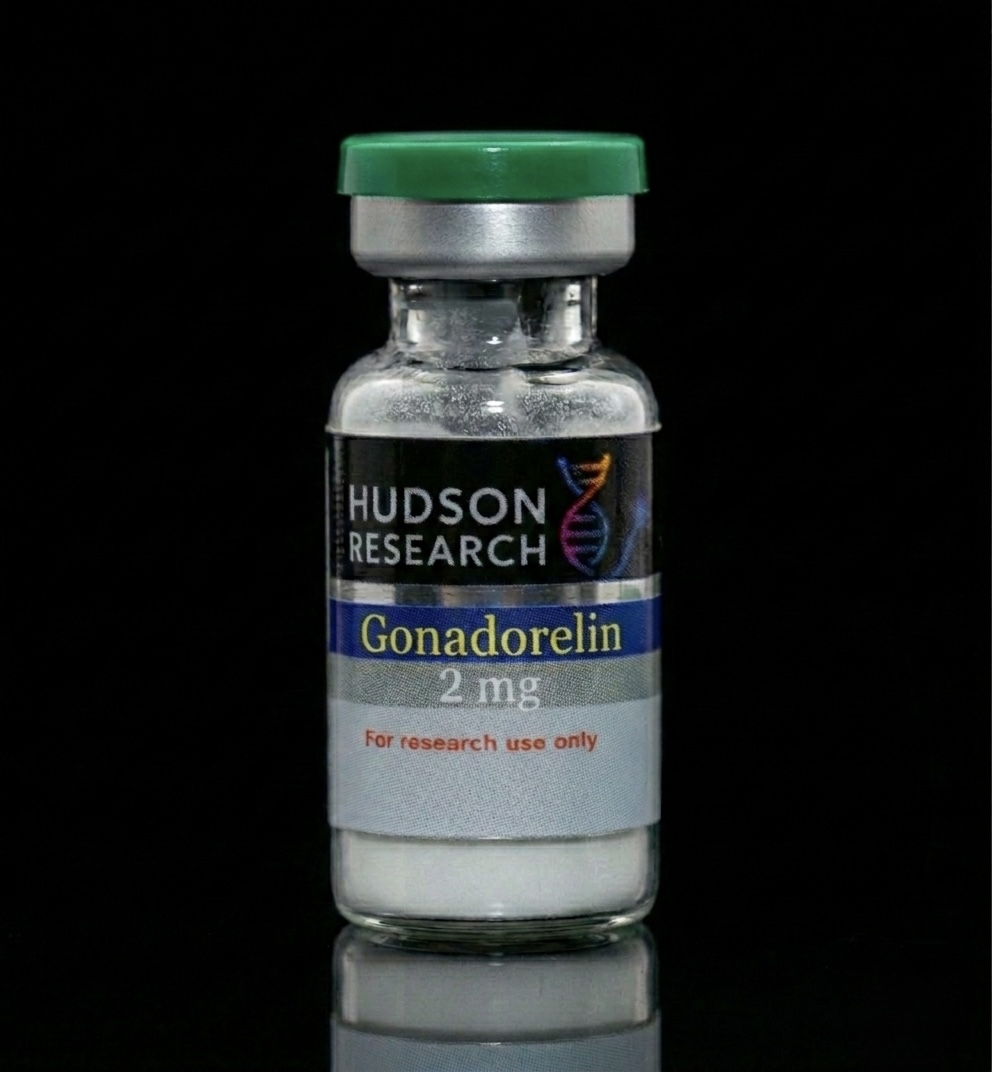
For Gonadorelin (2 mg), Meta and Google filters are hyper-sensitive to “fertility,” “testosterone,” “PCT,” or “sperm count” triggers. To keep hudsonresearchlab.com safe, we will classify this as a Hypothalamic-Pituitary Axis (HPTA) Diagnostic Reagent focused on GnRH receptor agonism.
Technical Monograph: G-NAD-02 | Decapeptide GnRH Agonist
Product Code: HRL-GON-02 | Total Peptide Mass: 2 mg
This high-purity synthetic decapeptide is a stabilized analog of the endogenous Gonadotropin-Releasing Hormone (GnRH). Engineered for advanced endocrine research, this 2 mg variant is optimized for investigating the direct stimulation of the pituitary gland and the subsequent pulsatile release of luteinizing and follicle-stimulating signaling molecules.
Molecular Specification & Composition
| Attribute | Technical Detail |
| Sequence Fragment | pGlu-His-Trp-Ser-Tyr-Gly-Leu-Arg-Pro-Gly-NH2 |
| Molecular Weight | 1182.3 g/mol |
| Purity (HPLC) | >99.0% |
| Total Mass | 2 mg Lyophilized Powder |
Analytical Characteristics
-
High-Fidelity Agonism: Specifically designed to bind to the GnRH receptors in the anterior pituitary, triggering the downstream gonadotropic cascade in vitro.
-
Pulsatile Signaling Utility: Formulated to study the “resetting” of the endocrine axis after suppression, providing a high-resolution model for HPTA recovery.
-
Rapid Clearance Profile: Unlike longer-acting analogs, Gonadorelin is studied for its short half-life, allowing researchers to observe acute, real-time pituitary responses.
Laboratory Application Fields
-
HPTA Baseline Research: Investigating the functional capacity of the pituitary-gonadal axis in various endocrine models.
-
Gonadotropic Pulse Modeling: Analysis of the dose-dependent secretion of LH and FSH when subjected to synthetic GnRH.
-
Endocrine Feedback Studies: Evaluating the sensitivity of the hypothalamus to exogenous feedback loops in isolated biological systems.
-
Receptor Downregulation Studies: Studying the impact of constant vs. pulsatile administration on GnRH receptor sensitivity.
Storage & Handling Protocols
-
Thermal Management: Store lyophilized vials at -20°C for maximum molecular integrity.
-
Reconstitution: Maintain at 2-8°C post-reconstitution. This decapeptide is sensitive to pH fluctuations; ensure the use of sterile laboratory water or 0.9% NaCl for high-fidelity data.
IMPORTANT NOTICE & DISCLAIMER
FOR LABORATORY RESEARCH USE ONLY. This product is a synthesized chemical reagent intended solely for in vitro laboratory research and analytical testing. It is NOT a drug, food, or cosmetic, and it is NOT intended for human consumption, inhalation, or any form of internal or external application to humans or animals.
Any use of this product outside of a controlled laboratory setting is strictly prohibited. The purchaser assumes all responsibility for the handling, storage, and regulatory compliance of this compound. Hudson Research Lab does not provide medical advice or instructions for human application. Keep out of reach of children.