Description
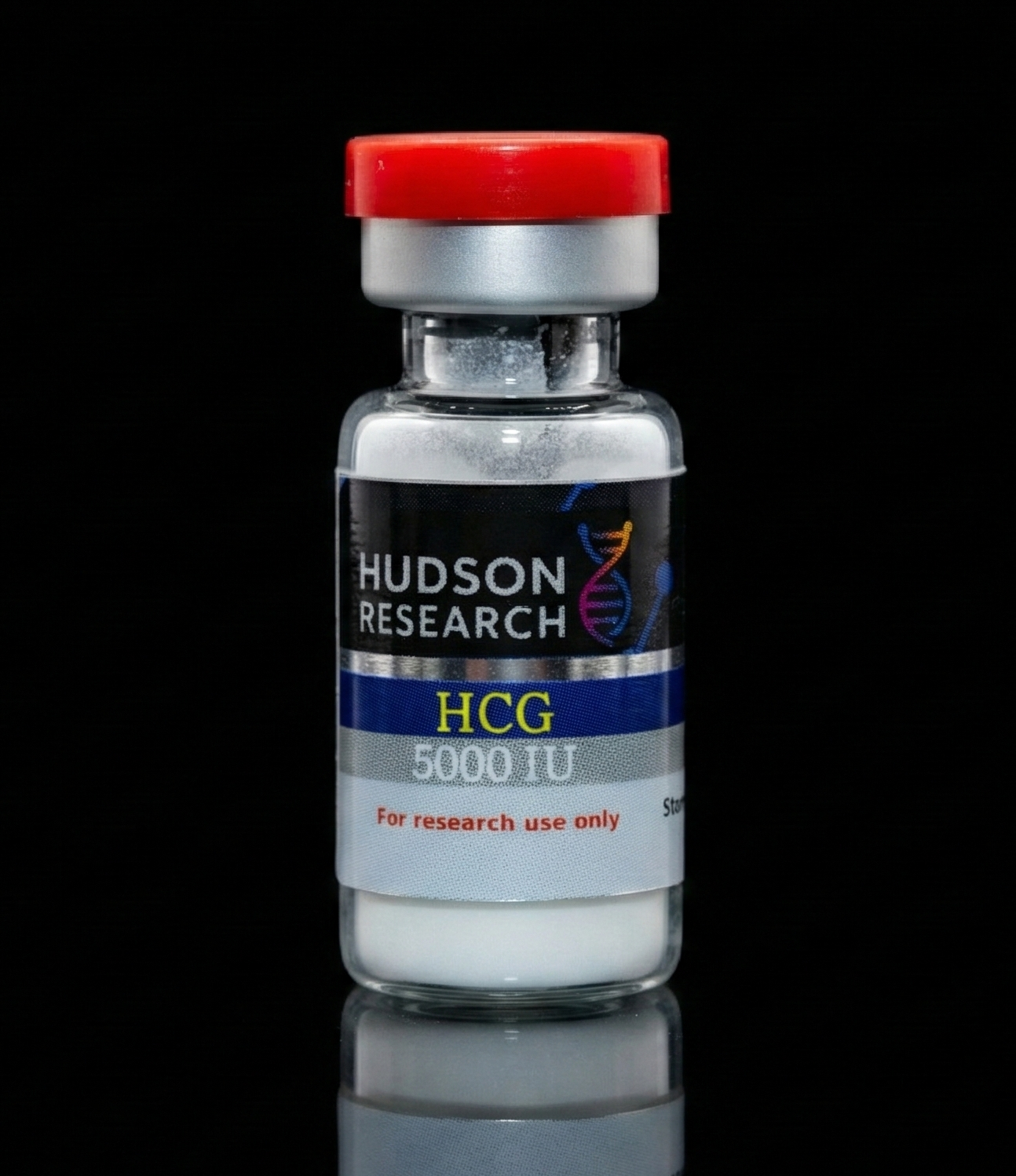
Product Name: Human Chorionic Gonadotropin (hCG) Molecular Weight: ~36,700 Da (36.7 kDa) Structure:Heterodimer consisting of an -subunit (92 amino acids) and a -subunit (145 amino acids).
Product Overview hCG is naturally produced by the placenta during pregnancy. However, in a laboratory context, it is a critical reagent for studying the hypothalamic-pituitary-gonadal (HPG) axis. While the alpha subunit is identical to that of LH, FSH, and TSH, the beta subunit confers its unique biological specificity. Because hCG has a significantly longer half-life than endogenous LH, it is the preferred compound for providing sustained LH-like activity in experimental models.
Mechanism of Action hCG functions as a potent agonist of the Luteinizing Hormone/Choriogonadotropin receptor (LHCGR), a G-protein coupled receptor.
-
Testosterone Synthesis (Males): By mimicking LH, hCG binds to receptors on Leydig cells in the testes, stimulating the conversion of cholesterol to testosterone. This pathway is critical for research into reversing testicular atrophy and restoring endogenous testosterone production during suppression (e.g., in TRT models).
-
Progesterone Production (Females): In ovarian models, it maintains the corpus luteum and stimulates the secretion of progesterone, mimicking the luteal phase support required for pregnancy maintenance.
-
Spermatogenesis: It initiates and maintains spermatogenesis in hypogonadotropic models.
Research Applications hCG is widely employed in reproductive biology and endocrinology research, including:
-
Hypogonadism Models: Investigating the restoration of testicular size and function following the use of suppressive exogenous androgens.
-
Infertility Studies: Protocols for inducing ovulation in females or stimulating spermatogenesis in males.
-
Cryptorchidism: Research into hormonal treatments for undescended testes in prepubertal animal models.
-
Tumor Markers: Use as a biomarker in oncology research for germ cell tumors.
Storage and Handling
-
Storage: Store lyophilized powder at 2-8°C.
-
Stability: Stable for 2 years when stored properly in lyophilized form. Once reconstituted with bacteriostatic water, the solution must be kept at 4°C and is generally stable for 30–60 days.
Disclaimer: This material is sold for research and development purposes only. It is not intended for human ingestion, diagnostic, therapeutic, or clinical procedures. All research must be conducted by qualified professionals in a laboratory setting.