Description
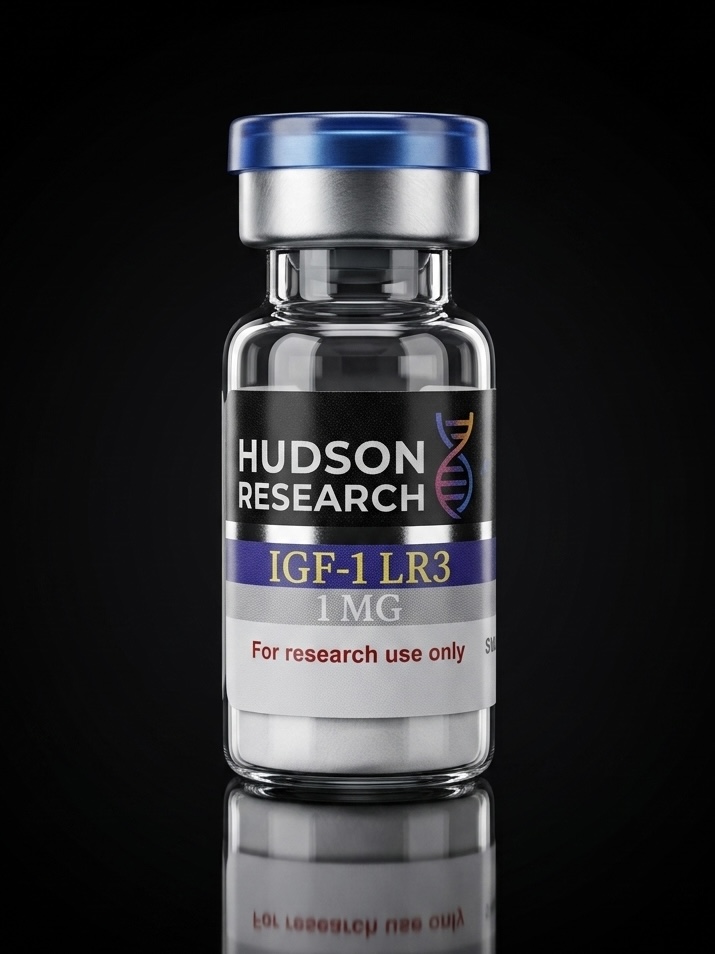
IGF-1 LR3 (Insulin-like Growth Factor-1 Long Arg3) is a synthetic, modified analog of endogenous IGF-1 developed strictly for in vitro and in vivo laboratory research. It serves as a valuable tool for investigating cellular growth pathways, tissue regeneration, and protein synthesis mechanisms.
Molecular Structure & Modifications
In laboratory environments, naturally occurring IGF-1 has a limited half-life (approximately 10–20 minutes) due to its high affinity for IGF-binding proteins (IGFBPs), which quickly neutralize its activity.
IGF-1 LR3 features two distinct structural modifications:
-
-
Amino Acid Extension: The addition of 13 amino acids to the N-terminus, increasing the total sequence length from 70 to 83 amino acids.
-
Amino Acid Substitution: The replacement of glutamic acid with arginine at position 3.
-
Impact on Research: These structural alterations significantly reduce the analog’s affinity for binding proteins. As a result, the peptide remains active in test environments for an extended half-life of 20–30 hours, allowing for sustained observation of its biochemical effects.
Primary Areas of Research
-
Cellular Hyperplasia: Researchers utilize the peptide to study the proliferation and differentiation of satellite cells into new myoblasts (cell splitting), rather than just the enlargement of existing cells (hypertrophy).
-
Nutrient Uptake Kinetics: It is used to monitor accelerated cellular uptake of glucose, amino acids, and glycogen within muscle tissue models.
-
Connective Tissue Regeneration: Investigations frequently focus on its role in accelerating the repair models of tendon, ligament, and bone cellular matrices.
-
Lipolysis Pathways: Studies observe its ability to shift cellular energy utilization away from glucose and toward fatty acid oxidation.
Observed In Vitro Counterindications & Risks
In experimental models, continuous exposure to IGF-1 LR3 presents notable variables:
-
Hypoglycemic Responses: Due to its structural similarity to insulin, it significantly alters glucose homeostasis in test subjects.
-
Systemic Organomegaly: Extended exposure can lead to abnormal cellular proliferation in internal organ tissue models.
-
Oncogenic Proliferation: While not a mutagen, the compound accelerates the proliferation rates of existing abnormal or malignant cell lines.
⚠️ Product Disclaimer
FOR RESEARCH USE ONLY: This compound is manufactured, distributed, and sold exclusively for laboratory research and development purposes. It is strictly not for human consumption, therapeutic, diagnostic, or clinical use. Any reference to biological effects or cellular mechanisms is based solely on findings from in vitro or animal-based experimental models.