Description
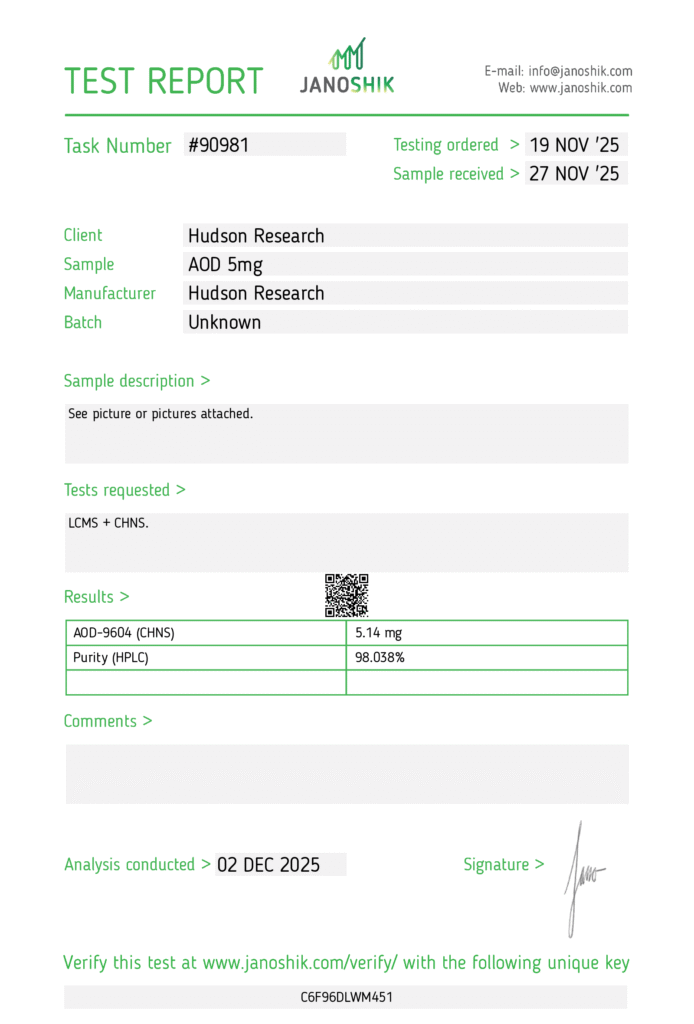
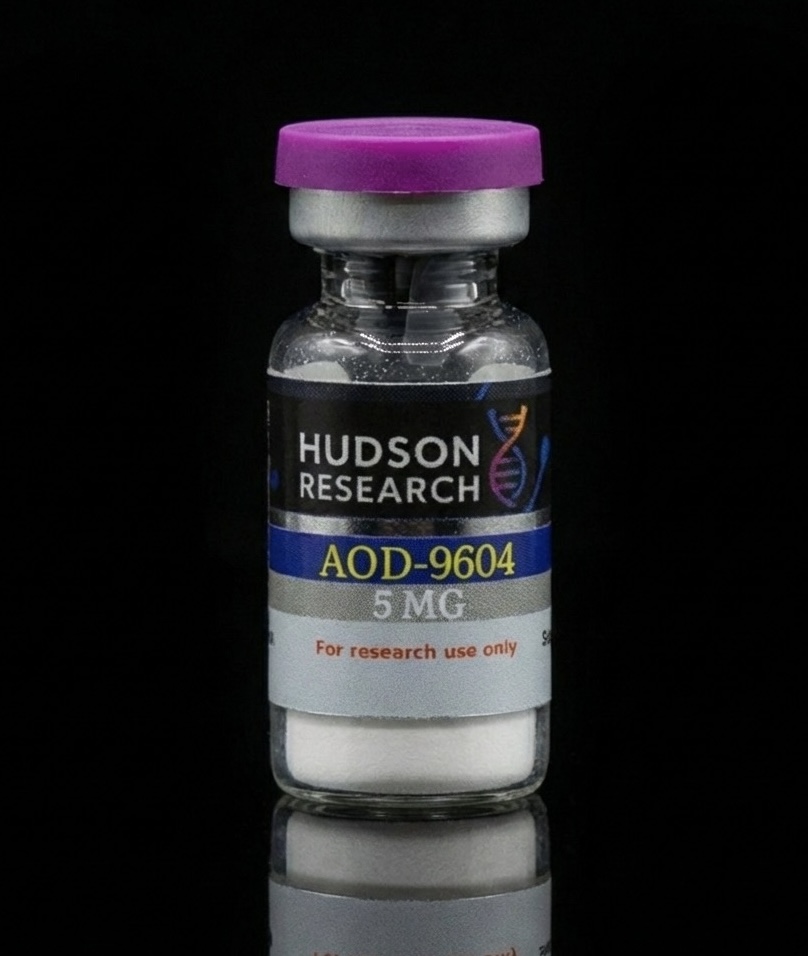
Technical Monograph: AOD-9604 | Lipolytic Fragment Reagent
Product Code: HRL-AOD-05 | Total Peptide Mass: 5 mg
This high-purity synthetic peptide is a stabilized C-terminal fragment of the human growth hormone (hGH) molecule, specifically residues 177-191 with an additional tyrosine at the N-terminal. Engineered for advanced metabolic research, this 5 mg variant is optimized for investigating the simulation of lipolysis without the concurrent induction of insulin resistance or systemic growth-promoting effects.
Molecular Specification & Composition
| Attribute | Technical Detail |
| Sequence Base | hGH (177-191) |
| Modification | N-Terminal Tyrosine Addition |
| Molecular Weight | 1815.1 g/mol |
| Purity (HPLC) | >99.0% |
| Total Mass | 5 mg Lyophilized Powder |
Analytical Characteristics
-
Selective Lipolytic Signaling: Specifically formulated to study the activation of beta-3 adrenergic receptors, facilitating high-resolution data collection in adipose tissue cellular models.
-
Non-Diabetogenic Design: Unlike the full-length somatotropin molecule, this fragment is engineered to investigate lipid breakdown without interfering with glucose transport or IGF-1 expression in vitro.
-
Structural Stability: Vacuum-sealed and lyophilized to maintain the integrity of the disulfide bridge, which is essential for successful receptor-mediated signaling during baseline testing.
Laboratory Application Fields
-
Adipocyte Metabolism Research: Investigating the rate of glycerol release and fatty acid oxidation in isolated white adipose tissue models.
-
Beta-3 Adrenergic Agonism Studies: Analysis of the peptide’s influence on thermogenic gene expression and mitochondrial activity in brown fat simulations.
-
Chondrogenesis Modeling: Evaluation of the peptide’s secondary role in stimulating the differentiation of mesenchymal stem cells into cartilage-forming cells.
-
Metabolic Pathway Mapping: Studying the impact of hGH-fragments on systemic energy expenditure simulations without somatogenic interference.
Storage & Handling Protocols
-
Thermal Management: Store lyophilized vials at -20°C for maximum molecular integrity.
-
Reconstitution: Maintain at 2-8°C post-reconstitution. Use sterile 0.9% NaCl or pH-neutral laboratory buffers.
-
Handling: This fragment is sensitive to rapid pH shifts; avoid high-velocity agitation and protect from all UV exposure to prevent degradation of the N-terminal Tyrosine residue.