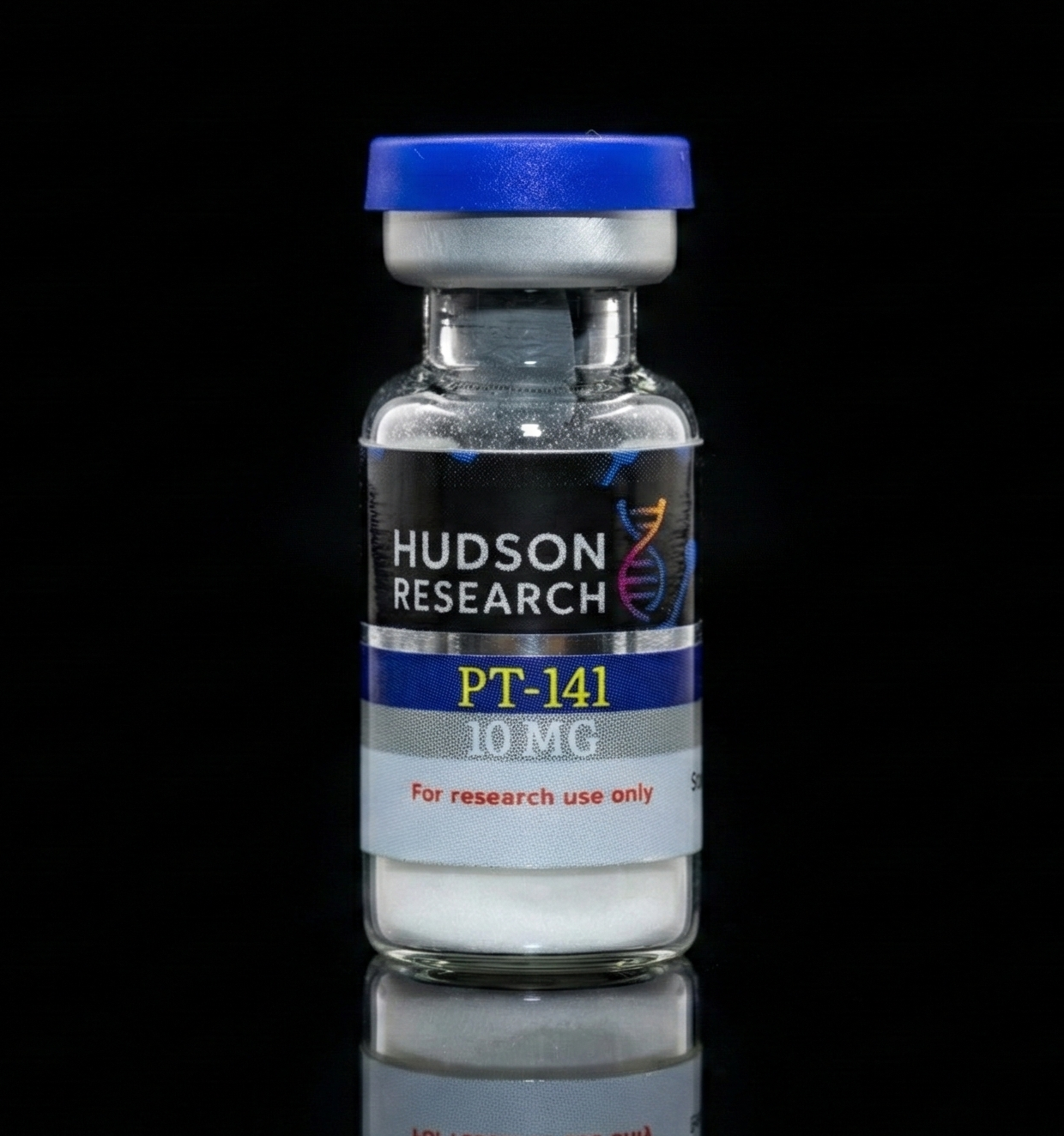
Description
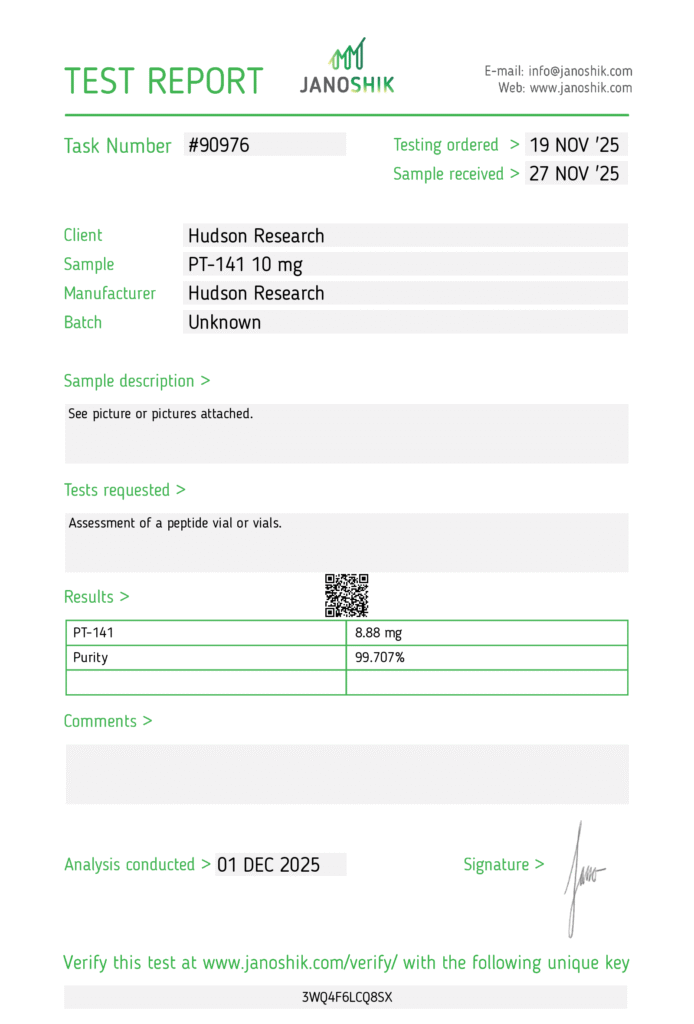
Product Name: PT-141 (Bremelanotide) Molecular Formula: C50H68N14O10 Molar Mass: ~1025.2 g/mol Sequence:Ac-Nle-Asp-His-D-Phe-Arg-Trp-Lys-OH (Cyclic 2-7)
Product Overview PT-141 is a cyclic heptapeptide lactam analogue of alpha-melanocyte-stimulating hormone (-MSH). Originally developed from Melanotan II, PT-141 was engineered to preserve the aphrodisiac effects of its predecessor while minimizing the melanogenesis (tanning) side effects. Because it influences the brain rather than blood flow mechanics, it represents a distinct class of research agents for investigating sexual dysfunction.
Mechanism of Action PT-141 functions through the activation of the melanocortin system in the brain:
-
CNS Activation: It crosses the blood-brain barrier and binds to melanocortin 4 receptors (MC4R) in the paraventricular nucleus (PVN) of the hypothalamus.
-
Dopamine Modulation: Activation of these receptors triggers the release of dopamine, a neurotransmitter critical for sexual motivation and arousal.
-
Solicitation Signaling: In animal models, administration has been observed to induce solicitation behaviors and increase copulatory efficiency, independent of the vascular status of the subject.
Research Applications PT-141 is widely utilized in neurobiology and urology research, specifically for:
-
Hypoactive Sexual Desire Disorder (HSDD): Studying the neurochemical basis of low libido in female models.
-
Erectile Dysfunction (Non-Responders): Investigating alternative pathways for arousal in models that do not respond to standard vascular agents (sildenafil/tadalafil).
-
Energy Homeostasis: Because MC4R is also involved in appetite regulation, PT-141 is occasionally studied for its secondary effects on food intake and energy balance.
Storage and Handling
-
Storage: Store lyophilized powder at 2-8°C. Protect from light.
-
Stability: Stable for 2 years when stored properly in lyophilized form. Reconstituted solution should be stored at 4°C and is generally stable for up to 4 weeks.
Disclaimer: This material is sold for research and development purposes only. It is not intended for human ingestion, diagnostic, therapeutic, or clinical procedures. All research must be conducted by qualified professionals in a laboratory setting.